















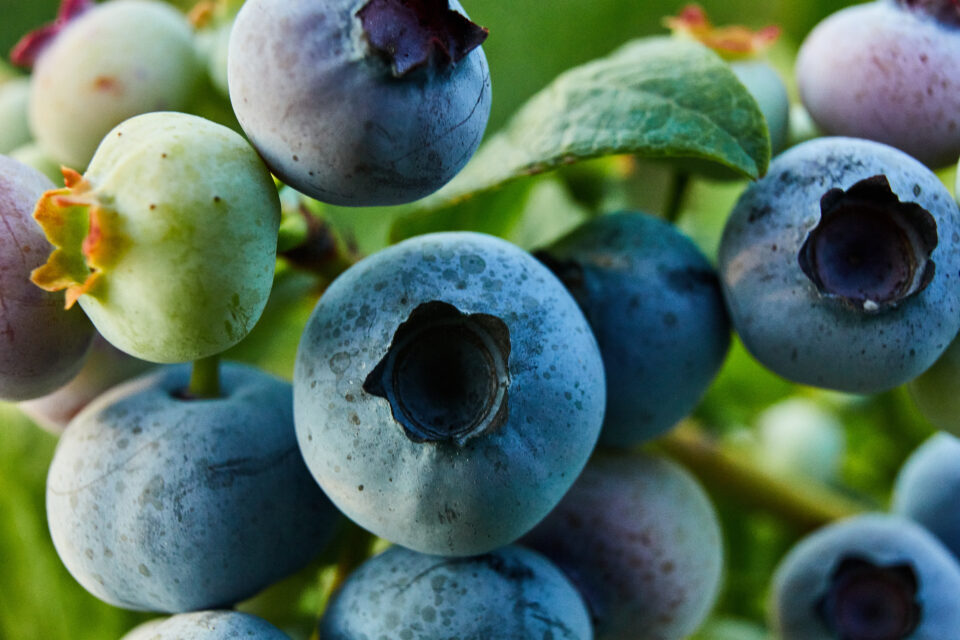
Blueberry plants demonstrate a growth pattern commonly seen across biological systems: an initial slow phase, a period of rapid acceleration, and then a plateau as natural constraints begin to dominate.
In the years following planting, vegetative growth and yield increase steadily as the root system establishes and fruiting wood develops. As plants mature, however, that rate of gain typically begins to slow.
Why growth levels off
A yield plateau is not usually a sign of poor performance. More often, it reflects the point at which the plant is operating within its biological and structural limits.
In blueberries, those limits commonly include:
- Canopy shading, reducing light penetration and fruiting efficiency
- Ageing fruiting wood, lowering productive potential over time
- Constraints on water and nutrient use, limiting further gains in plant performance
At that stage, the system remains productive — but growth becomes harder to sustain on the same trajectory.
A double S-curve describes what happens when those limits are not ignored, but redefined
Rather than trying to force more output from the same conditions, growers can create a second phase of productive growth by changing the system around the plant. This allows performance to move onto a new curve, with renewed potential.
How growers create a second curve
In practice, that often involves:
- The initial selection of blueberry varieties that are best adapted to the growing environment and are high yielding.
- Pruning to renew fruiting wood and improve canopy balance.
- Soil and nutrition management to maintain root health, structure, and productive efficiency.
These interventions work alongside the plant’s biology, helping to re-establish the conditions required for sustained productivity.
A practical reminder from blueberries
Blueberries illustrate an important principle: sustained gains rarely come from pushing harder against existing limits. They come from recognising when a system is approaching its plateau — and making the right changes at the right time.
Growth matters. But in biological systems, renewal matters just as much.