

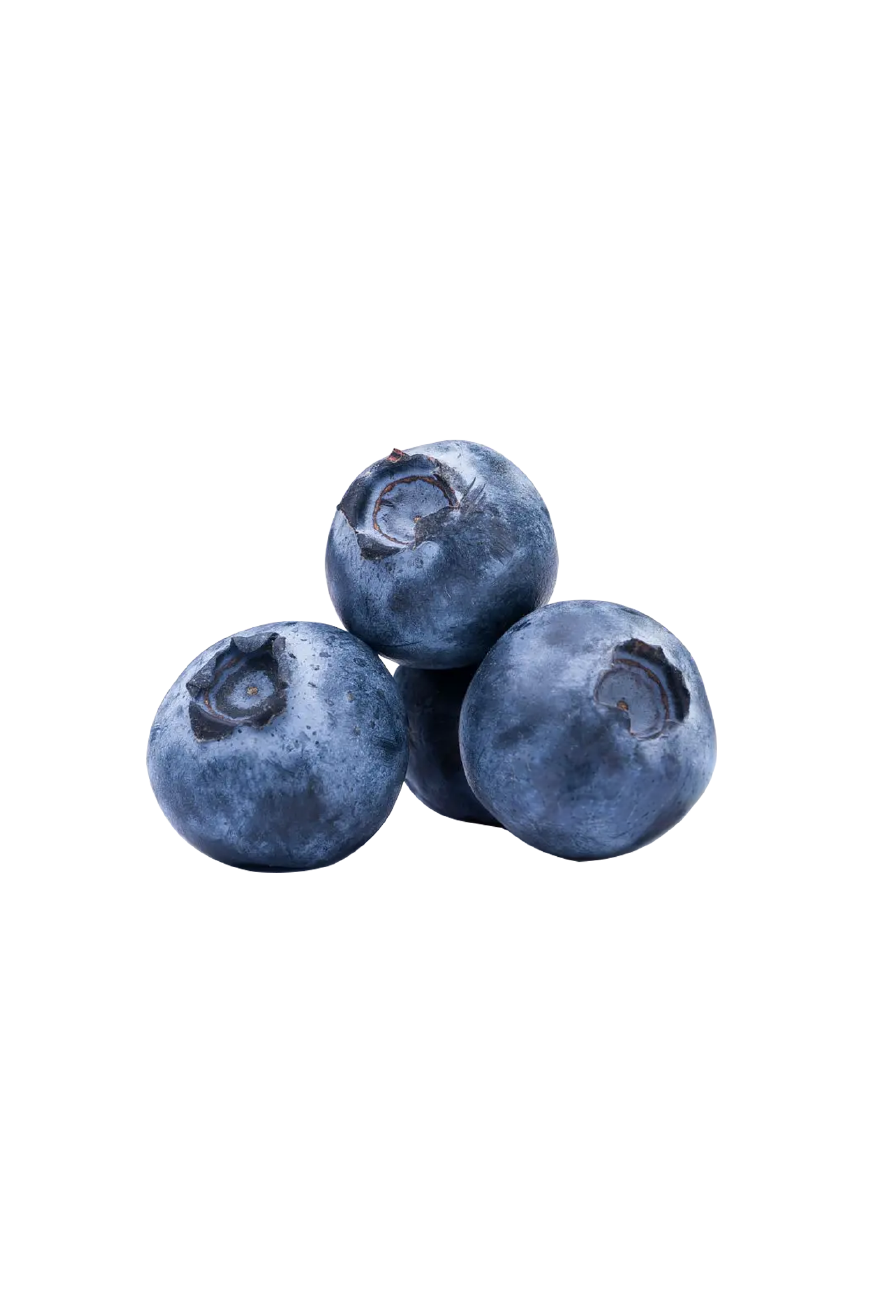











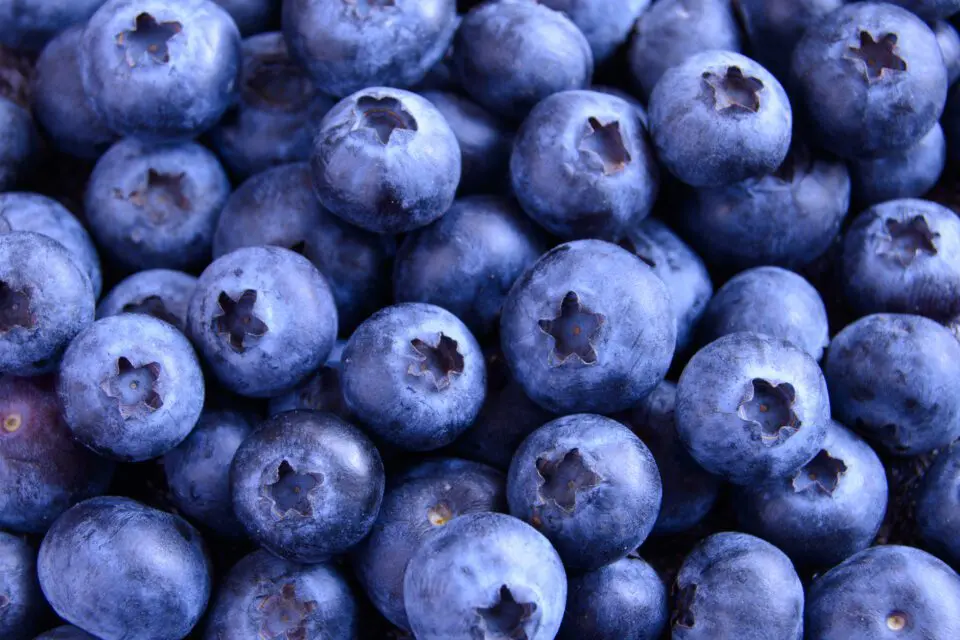
It’s easy to assume blueberries are naturally blue—but what we see doesn’t tell the full story.
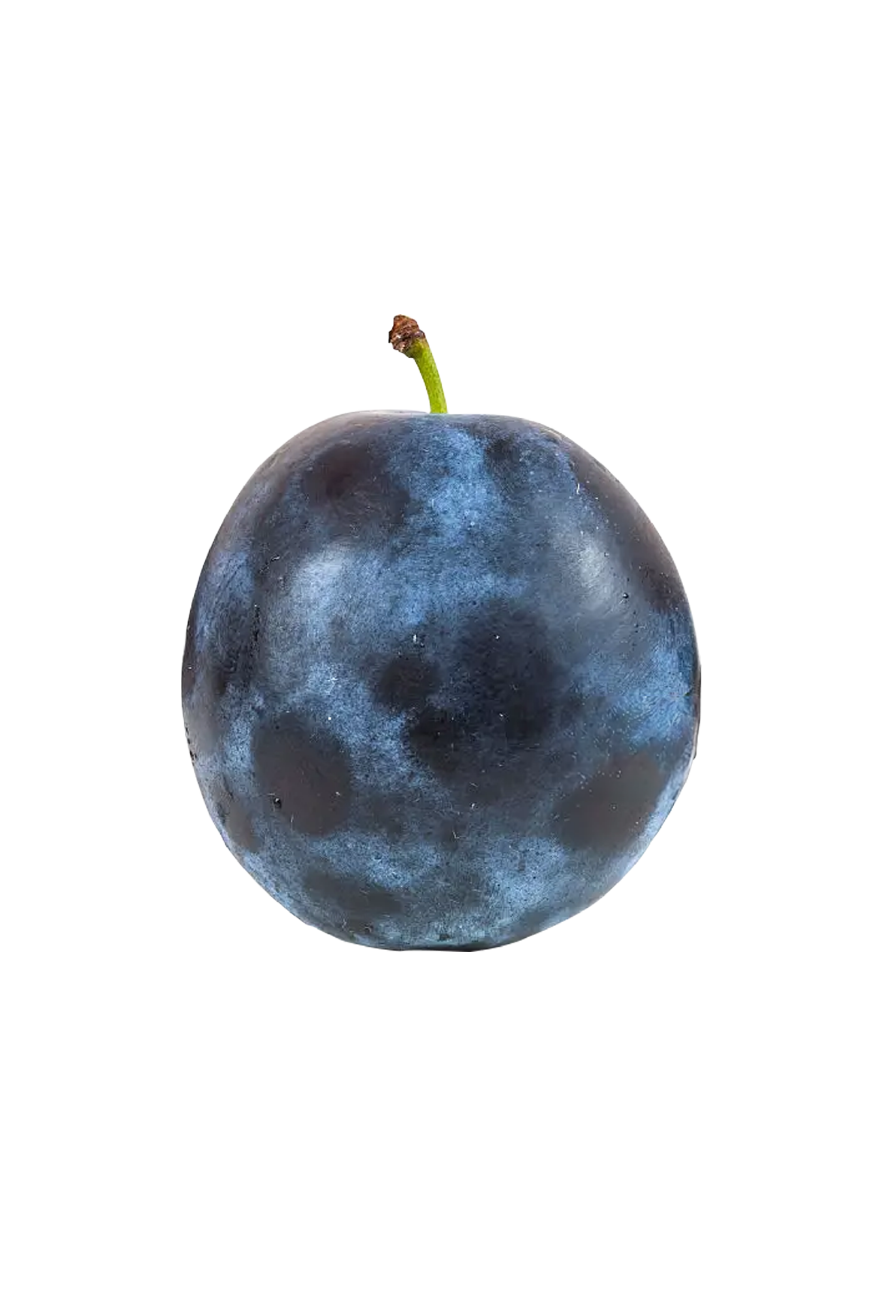
Blueberries don’t get their colour from blue pigmentation. Instead, the signature tone we see comes from the fruit’s bloom—a soft, dusty coating that forms naturally on the skin. This bloom is made up of microscopic wax crystals that scatter light. Rather than absorbing colour, it reflects blue wavelengths back to our eyes. Underneath, the skin and flesh are closer to a red‑purple hue.
Gently rub the surface, and the illusion disappears. The berry becomes darker, glossier, and noticeably less blue—despite nothing inside changing.
More than just a surface feature
The bloom isn’t just responsible for appearance; it plays a vital role in the fruit’s condition and longevity. It acts as a natural barrier that:
- Reduces moisture loss
- Improves resistance to handling damage
- Helps protect against pathogens
In practical terms, this means better shelf life, slower dehydration, and improved eating quality by the time the fruit reaches the consumer.
Why bloom matters in the supply chain
Across the supply chain, intact bloom is a recognised indicator of freshness—reflecting how well the fruit’s natural protective layer has been preserved from harvest through to handling. When bloom is preserved, it signals:
- Higher overall quality on arrival
- Less handling through the supply chain
- Stronger natural protection of the fruit
Supporting fruit beyond physiology
Even so, blueberry physiology isn’t always enough to withstand today’s long and demanding supply chains.
To maintain condition over extended storage and transit periods, many growers use RYPEN-integrated packaging solutions. By embedding ethylene moderating technology directly into the material, these formats help slow ripening at source—preserving freshness and extending marketable life, even under the pressures of long, complex supply chains.
A lesson from nature
Blueberries demonstrate that nature doesn’t always achieve colour through pigments alone. Sometimes, it uses structure, physics, and surface chemistry—solving multiple challenges at once in a single, elegant design.