


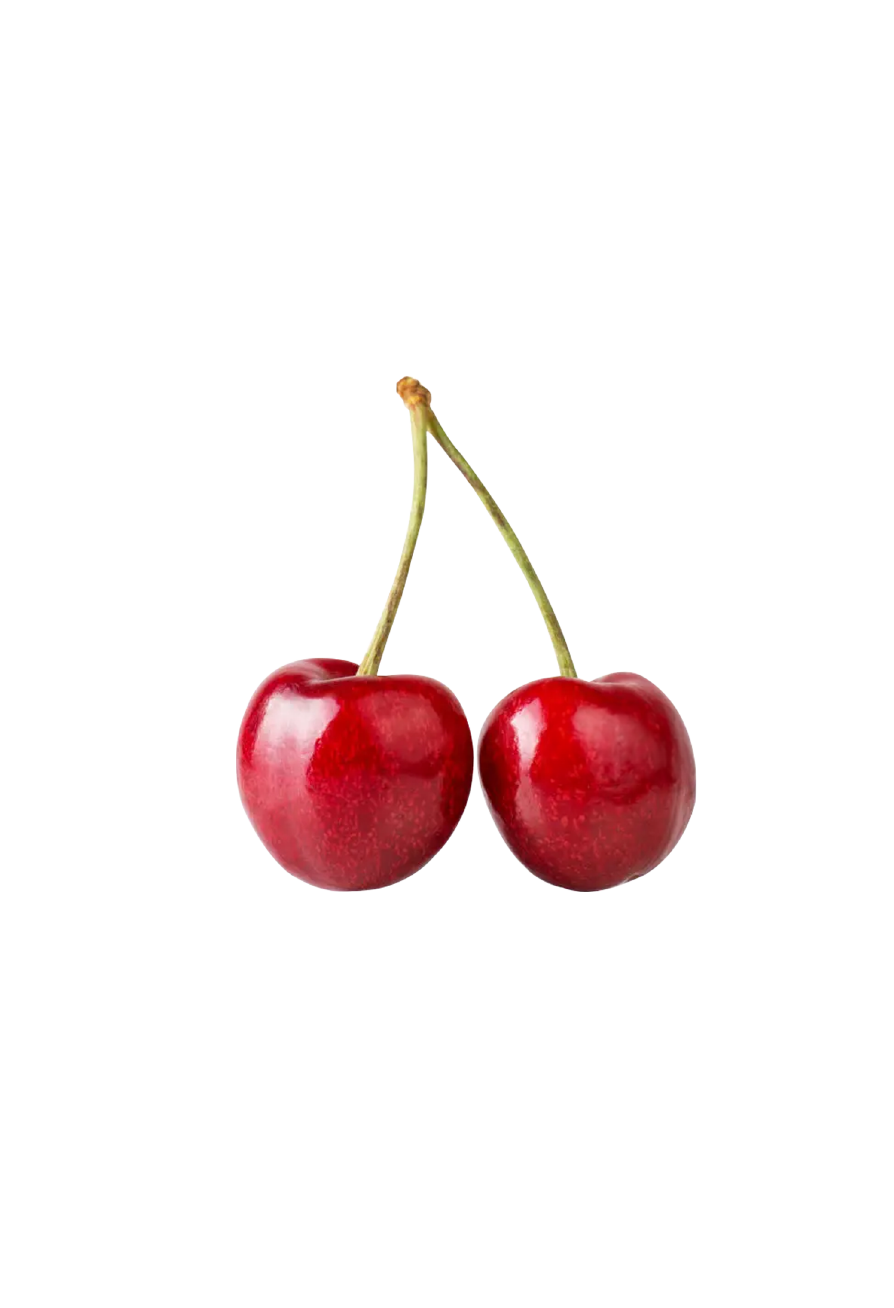










Exporting premium cherry cultivars such as Regina and Lapins across global supply chains presents a significant postharvest challenge. With journeys often lasting 40–50 days, fruit must endure extended storage, fluctuating micro‑conditions, and unavoidable handling stress. Even when cooled and atmospherically managed, cherries frequently arrive with pitting, softening, stem browning, and darkening—all issues that reduce marketable yield and raise claim risk.
These defects are strongly linked to ethylene exposure, even at extremely low concentrations.
Ethylene: a small molecule with a big impact
Ethylene accelerates biochemical changes that compromise cell wall structure and membrane stability. In sweet cherries, this leads to three primary categories of defects:
Pitting & Surface Indentations: Ethylene stimulates enzymes that degrade pectin—the structural matrix responsible for cell adhesion. As the pectin network weakens, localised tissue collapses under minor pressure, creating visible pits.
Stem Browning & Detachment: The pedicel is highly sensitive to ethylene. Exposure drives rapid dehydration, pigment oxidation, and weakening of the cell junctions anchoring the stem to the fruit. The result is reduced freshness perception, brown and brittle stems, and higher detachment rates.
Softening & Loss of Firmness: Cell wall breakdown reduces tissue strength, while oxidative stress disrupts plasma membranes. As membranes lose integrity, fluids leak, pigments oxidise, and internal browning becomes more pronounced.
Even cultivars known for firmness—like Regina and Lapins—cannot avoid these biochemical reactions during extended storage.
What’s happening inside the fruit
Cherries exposed to ethylene experience:
- Activation of pectin-degrading enzymes
- Compromised membrane permeability
- Accelerated pigment oxidation
- Loss of cell-to-cell adhesion
These cellular changes drive the visible symptoms: softening, darkening, and pitting. Once these processes start, they continue throughout the supply chain, reducing shelf life and consumer eating quality.
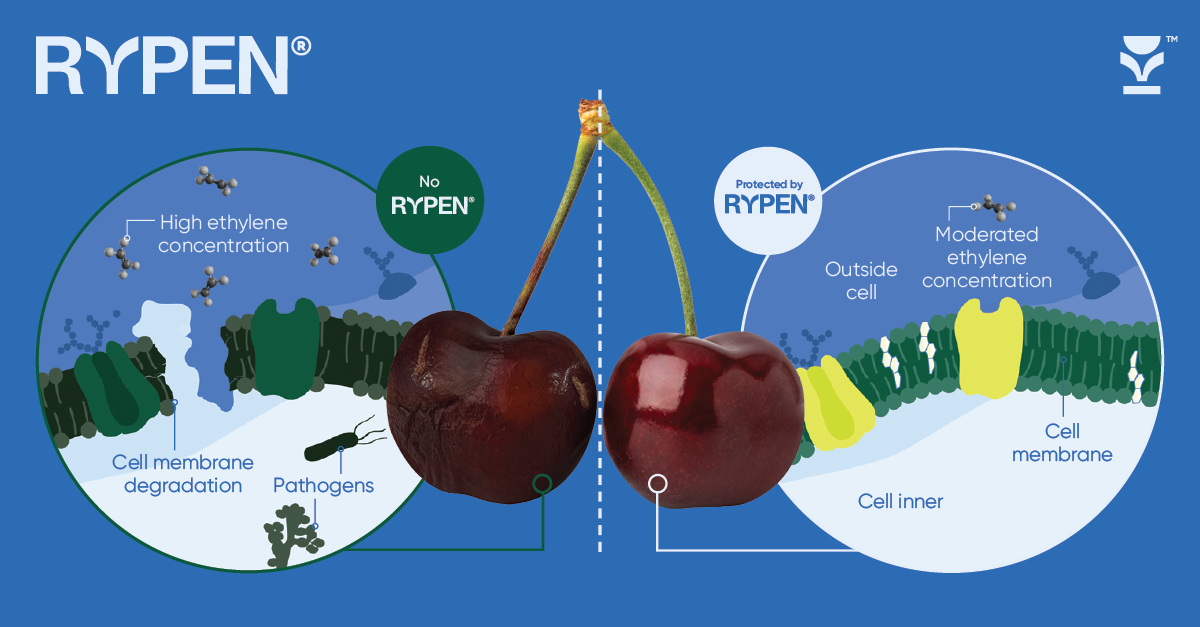
Evidence from post-harvest trials
Commercial trials have clearly demonstrated the scale of ethylene’s impact:
- Stem dehydration was 68 times more severe in cherries exposed to ethylene without RYPEN protection.
- Internal browning doubled when compared with fruit packed using RYPEN protection.
These findings highlight why traditional controlled-atmosphere or standard packaging alone is not enough for long-haul export programs.
Why ethylene moderation is essential
Controlling ethylene throughout the post-harvest supply chain helps preserve:
- Firmness
- Bright, stable colour
- Fresh, hydrated stems
- Resistance to pitting and bruising
- Shelf life and arrival quality
For long transit times, protecting cellular integrity is the key to reducing waste and maintaining premium condition.