









Fresh produce quality is often shaped by a delicate balance: keeping enough moisture in the product to prevent dehydration, while avoiding the free moisture that allows mould to develop.
In postharvest supply chains, mould and dehydration may look like separate problems. In reality, they are often different outcomes of the same challenge — managing moisture, temperature and product condition consistently from harvest to arrival.
When moisture becomes a risk
Fresh produce naturally loses water after harvest. If that water loss is too high, quality can decline quickly. Produce may begin to lose:
- firmness
- gloss
- texture
- visual appeal
- saleable condition
However, too much moisture around the product creates a different problem. Free moisture, condensation and high humidity can increase the likelihood of fungal growth, particularly where airflow is limited or temperatures fluctuate.
Why both can happen at once
One of the biggest challenges in packed fresh produce is that conditions are not always uniform.
Within the same pack or carton:
- one area may retain excess moisture and become more vulnerable to mould
- another area may lose water and begin to shrivel
- temperature variation may increase condensation risk
- uneven ripening may create mixed product condition
This means mould and dehydration can appear together, even when the wider supply chain appears well controlled.
Dehydration does not always mean inedible
It is also important to recognise that dehydrated produce is not always unsuitable for consumption. In many cases, it may remain edible, but its appearance, texture and eating quality can be reduced.
For commercial supply chains, this still matters. Loss of firmness, dullness, shrivel and uneven condition can all reduce customer acceptance and increase waste.
Where ethylene moderation fits
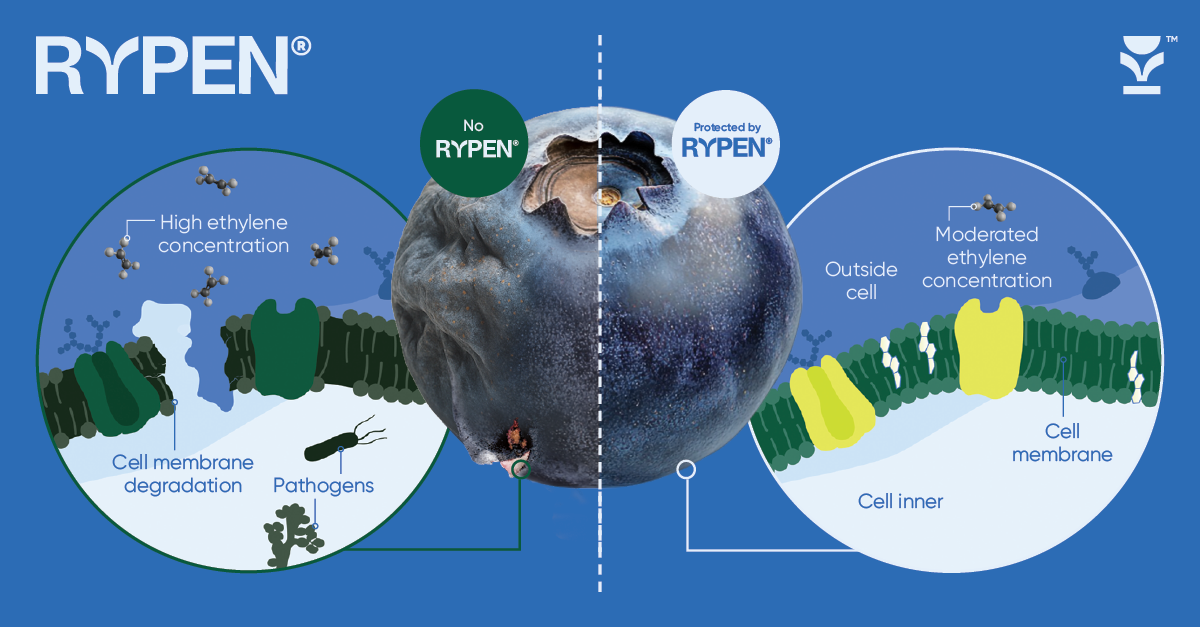
Once temperature and moisture management are broadly in place, ethylene can remain an important driver of uneven ripening, softening and quality variation.
By helping moderate ethylene exposure close to the produce, RYPEN products by It’s Fresh support more consistent condition through storage and transit. This can help reduce the instability behind shrivel, over-ripening and the uneven pack outcomes that contribute to both dehydration and mould risk.
Fresh produce protection is not about managing one factor in isolation. It is about maintaining balance — across moisture, temperature, ethylene and time.