


















A newly published peer‑reviewed study in Horticulture, Environment & Biotechnology (DOI 10.1007/s13580-025-00792-x), authored by Camilo López Cristoffanini (PhD) and co‑authored by Nina Bougas (PhD), offers significant new understanding of the physiological and biochemical factors influencing table grape freshness. The research clarifies how ethylene, temperature, and enzyme activity drive rachis browning—and introduces a more objective method for assessing it.
A more precise way to measure rachis quality
The UC Davis visual scale has long been the industry standard for rachis browning assessments, but its subjectivity limits accuracy, especially when deterioration becomes severe. The researchers evaluated a digital image‑based scoring method, comparing it with the visual scale in Autumn Crisp® and Sweet Globe™ grapes.
Both methods correlated strongly, but a notable difference emerged at 20 °C:
- The subjective visual scale became too saturated for assessors unable to differentiate worsening browning once it appeared severe.
- However, the objective digital image analysis continued detecting small, meaningful changes, providing a more sensitive and consistent measure.
This represents one of the most comprehensive comparisons of visual and digital scoring techniques to date and supports the wider adoption of objective, data‑driven postharvest assessment tools.
Ethylene’s under‑recognised influence on grape senescence
Although grapes are traditionally considered non‑climacteric, the study recorded measurable ethylene production and CO₂ respiration in both varieties—especially at 20 °C—coinciding with accelerated rachis browning. This indicates that ethylene plays a more influential role in grape senescence than historically acknowledged.
Yet ethylene is not the sole driver of varietal differences. At –0.5 °C both varieties produced similar ethylene and respiration rates, but Sweet Globe™ still browned and dehydrated more rapidly, suggesting that genetic and physiological traits also play a major role. These findings highlight the need for cultivar‑specific ethylene‑moderating strategies, rather than one‑size‑fits‑all approaches.
Why grape stems brown: The ethylene–enzyme link
The study also examined the biochemical mechanisms behind rachis browning. It identified polyphenol oxidase (PPO)—an enzyme responsible for browning reactions in many crops—as a key factor. Crucially varieties with greater ethylene sensitivity showed higher PPO activity, this accelerates the browning process and reducing the perceived freshness of the rachis. This dual influence of ethylene sensitivity and PPO activity helps explain why some grape varieties deteriorate faster, even under similar handling and storage conditions.
What this means for the industry
The study’s findings underline three major points for growers, exporters, breeders, and supply‑chain quality teams:
- Digital scoring tools offer more consistent and sensitive quality measurements.
- Ethylene meaningfully affects grape senescence, and its impact varies by variety.
- Browning is driven by both hormonal and enzymatic pathways, not simply ageing or temperature.
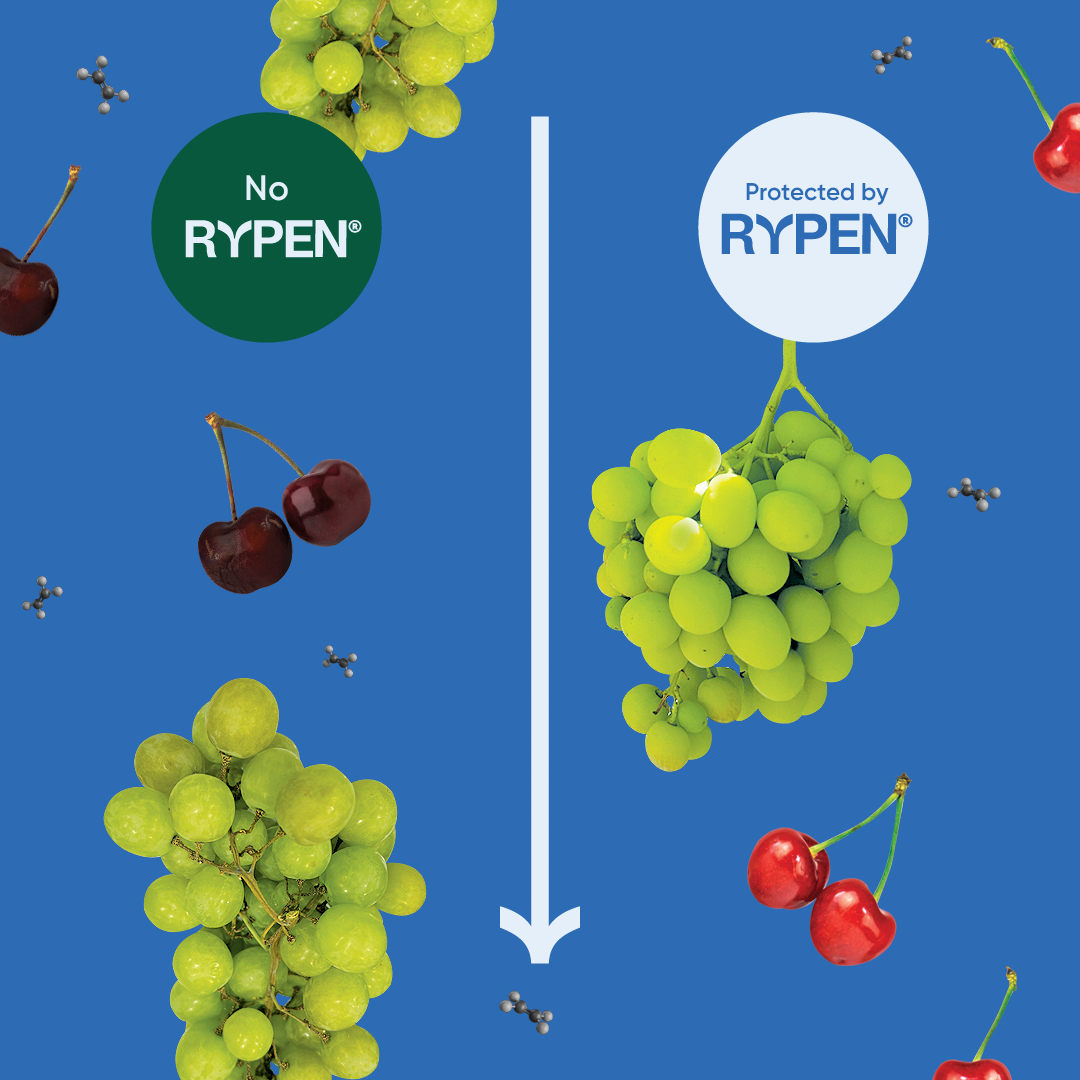
At RYPEN, these insights help inform how our ethylene‑moderating technologies support the industry—allowing grapes to stay greener and fresher for longer while enabling breeders to focus on premium flavour, size, and texture without compromising postharvest performance.