
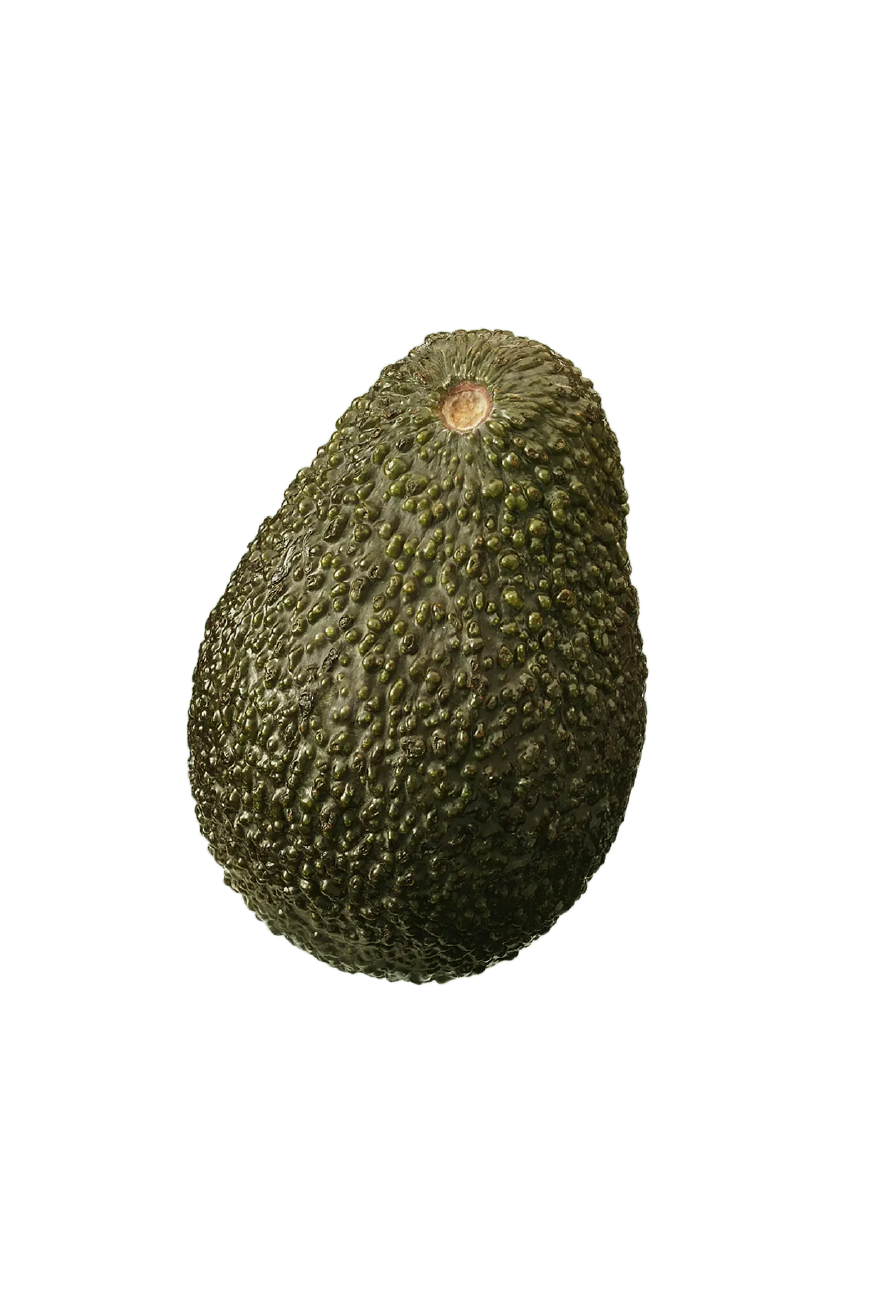












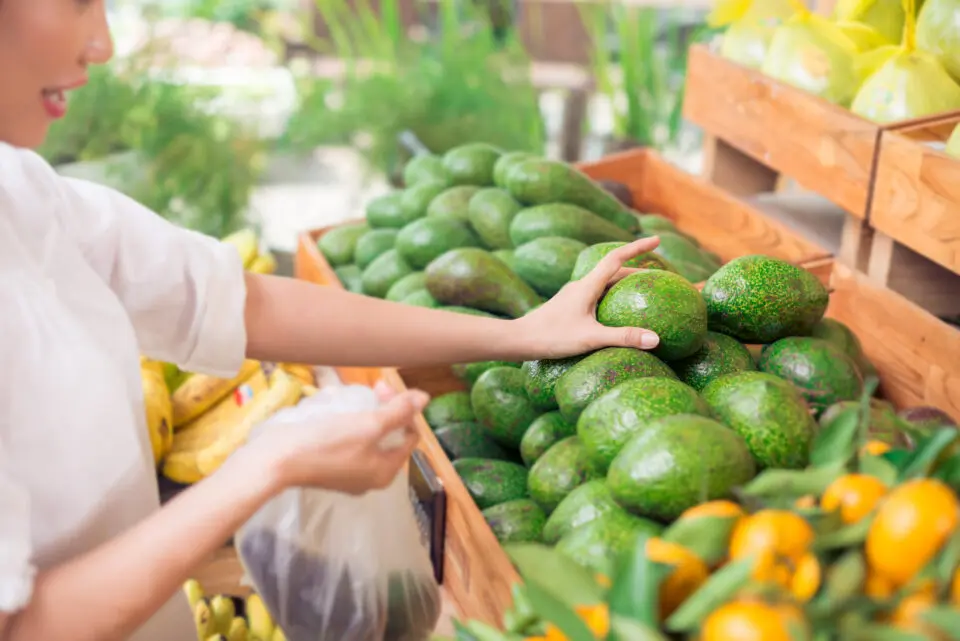
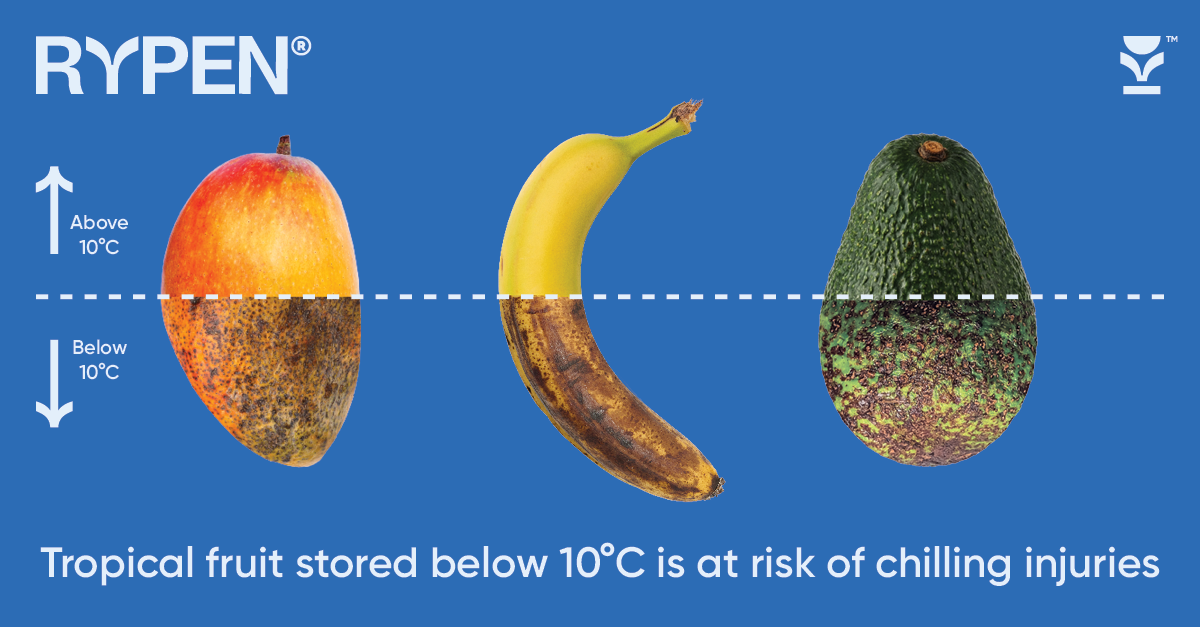
Tropical fruits like bananas, avocados, mangoes, papayas, pineapples and dragon fruit all evolve in consistently warmer climates, where ripening is driven by steady temperature and natural ethylene production. When these fruits are exposed to refrigeration, they can experience what’s known as chilling injury—a form of physiological stress that disrupts normal ripening and accelerates decay.
What happens in the fridge?
Cold storage slows biological processes, but for tropical produce, it does more harm than good. Instead of preserving quality, it interferes with ripening pathways and damages cell structure.
Common signs of chilling injury include:
- Flesh browning and uneven ripening in avocados
- Skin darkening in bananas and mangoes
- Water-soaked patches in dragon fruit
- Loss of flavour, aroma, and texture across all varieties
Interestingly, much of this damage isn’t immediately obvious. Fruit may appear fine in the fridge, only for symptoms to rapidly emerge once it returns to room temperature—often resulting in faster deterioration than if it had never been chilled.
A smarter approach to freshness
Maintaining quality isn’t just about lowering temperature—it’s about working with fruit biology. Ethylene, the natural plant hormone responsible for ripening, plays a critical role here.
RYPEN technology by It’s Fresh offers an alternative approach. Rather than relying on refrigeration, solutions such as the RYPEN Leaf gently moderate ethylene exposure. This helps stabilise the ripening process—supporting both shelf life and eating quality without the risk of cold damage.
Originally designed to support long-distance transport for growers and exporters, this same principle can be applied at home using Lakeland StayFresh Sheets, giving consumers a simple way to support freshness day to day.
Best practice for consumers
To keep tropical fruit at its best:
- Store at room temperature
- Keep out of direct sunlight
- Place a RYPEN Leaf nearby (in a fruit bowl or open container)
- On very hot days, move to a cool, shaded area (avoid below 10 °C)
Freshness isn’t simply about slowing things down. It’s about understanding how fruit behaves—and creating the right conditions for it to perform at its best.